Scoped Export Contracts as the Access Boundary for Warehouse-Grounded AI Agents
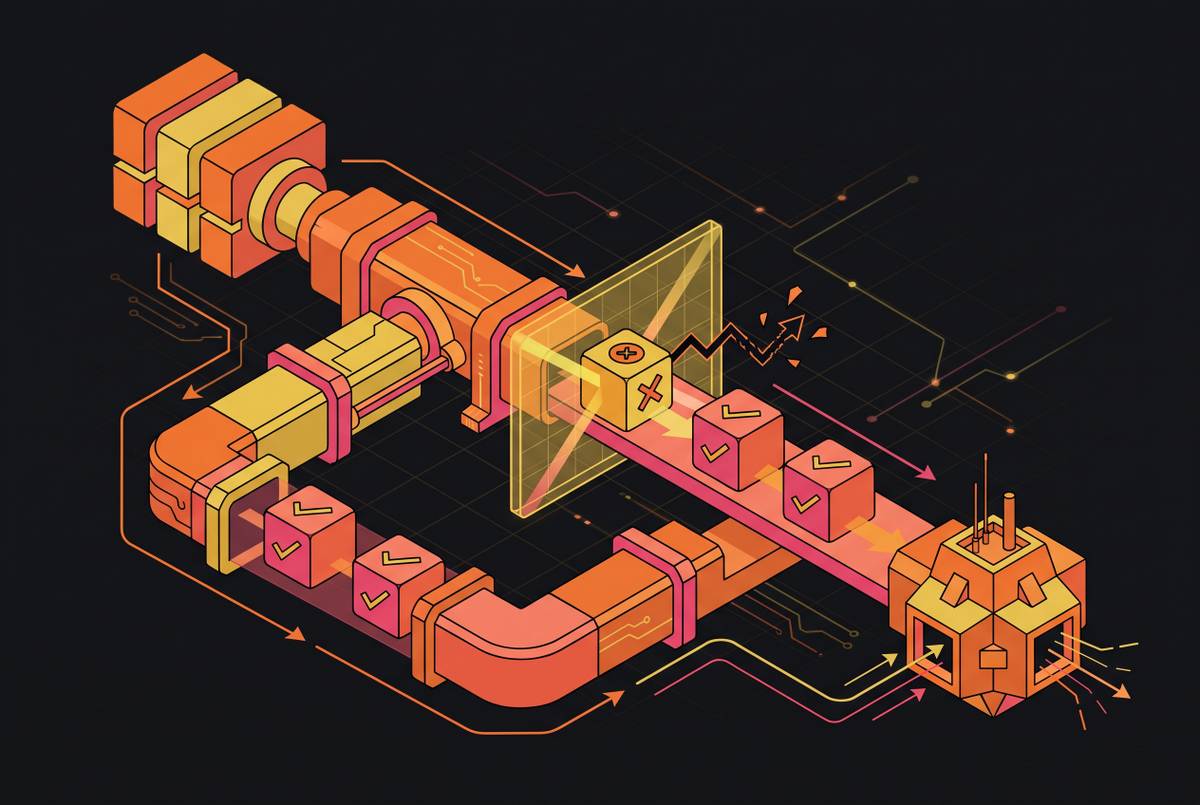
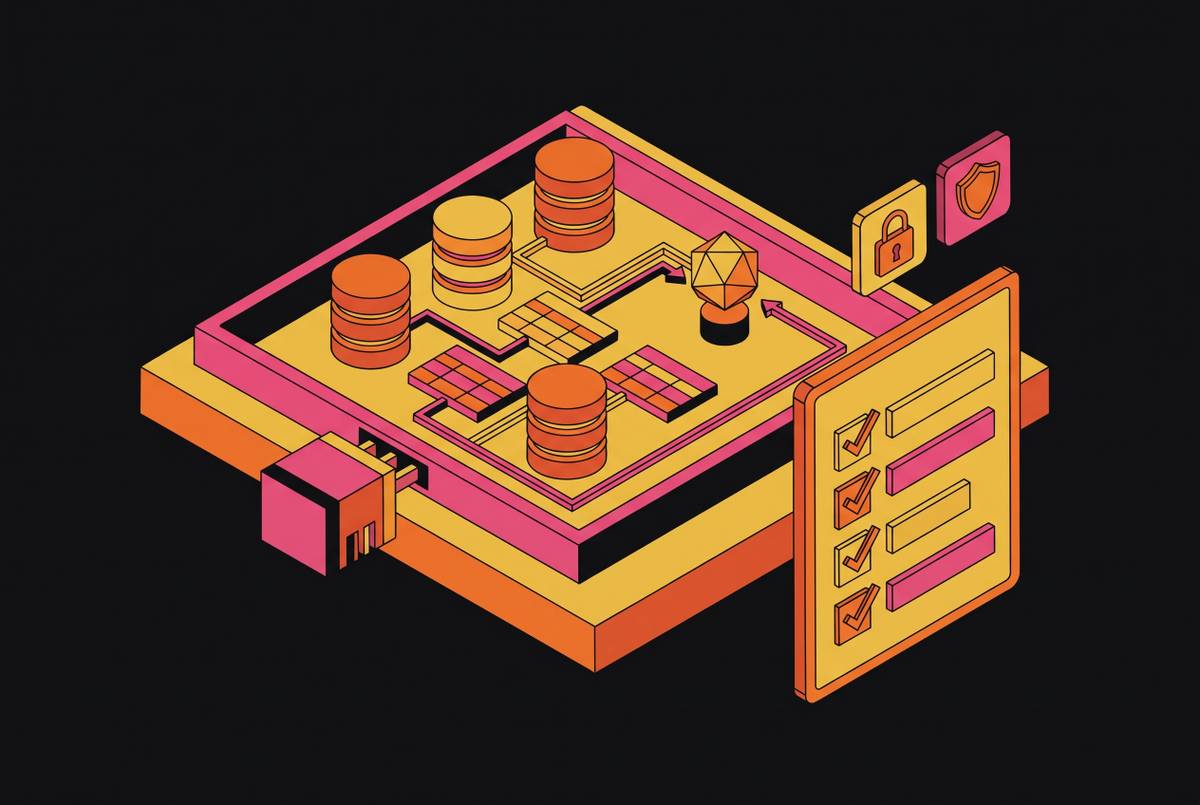
Scoped contracts enforce agent access boundaries before data delivery.
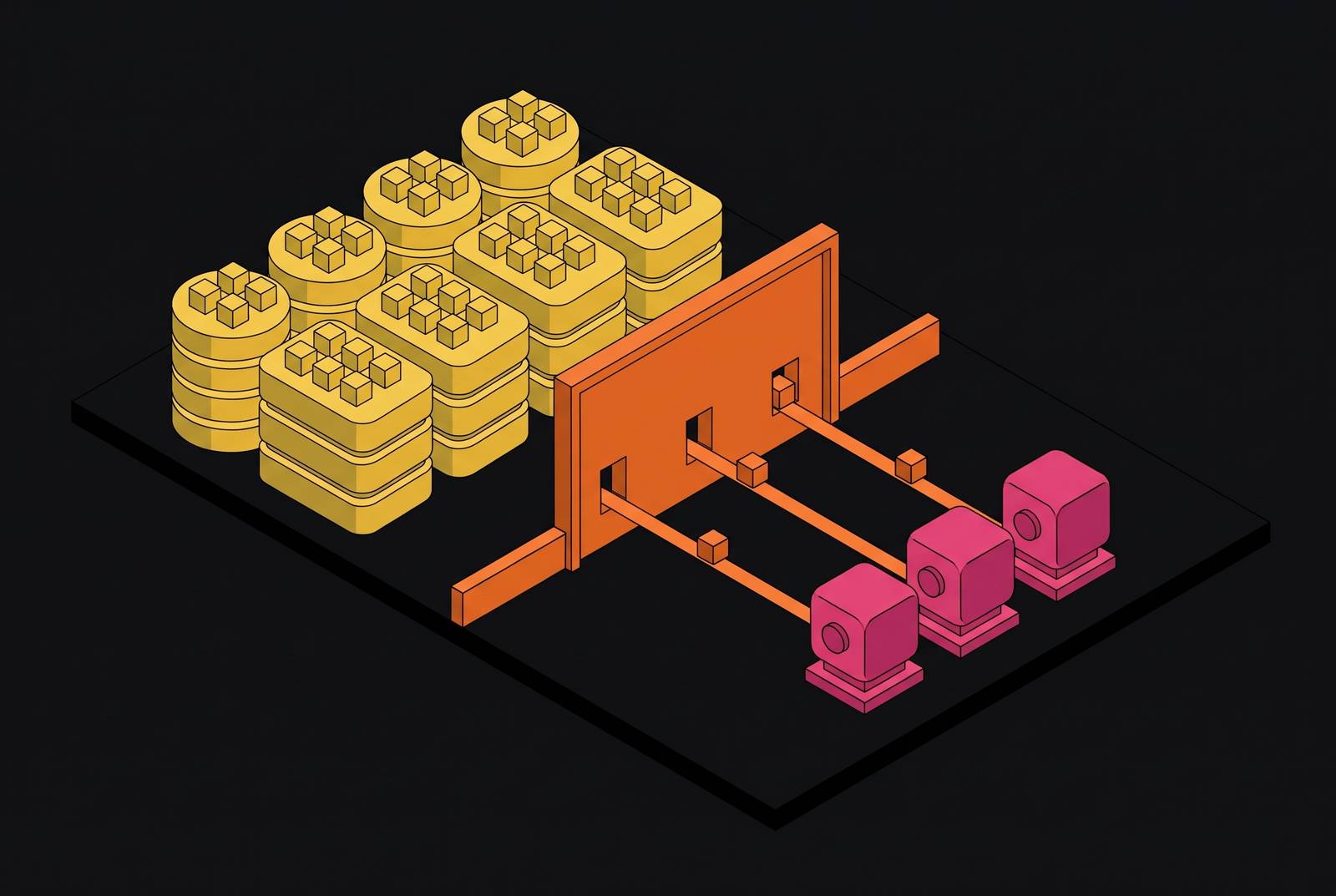
Warehouse-grounded AI agents can answer questions from customer-owned data without direct pipeline access when an embedded connectivity layer enforces a scoped export contract before delivering data to the model. The contract declares which tables, columns, rows, and operations the agent may access, on whose authority, and under what conditions. When the contract is set before connection provisioning, it gives the working integration an access boundary it can enforce.
Why warehouse-grounded AI agents inherit whatever their connection carries
A pilot often goes into production with the same credential that made it work. The team connects an agent to a warehouse to prove that the feature works, then leaves access scoping for later. Once the pilot succeeds, the pressure to revisit that decision falls away. The credential remains the agent’s effective access policy. This is a sequencing failure.
The same mechanism applies beyond warehouses. An agent built to summarize documents can inherit read access to every file an employee can open, although its assigned task requires only a narrow subset. Nothing in the task description reduces those permissions. An agent can then issue thousands of queries in the time a human analyst writes one, exposing or accidentally triggering policy gaps at machine speed.
Model Context Protocol, or MCP, standardizes how an agent requests data from a tool or system, while authorization must happen elsewhere. A server that faithfully delivers everything its underlying credential can reach is a pipe. Connecting through MCP changes the interface while leaving the grant intact.
What the over-permissioned agent actually risks at enterprise scale
Simon Willison’s lethal trifecta framework identifies a specific combination of private data access, exposure to untrusted content, and the ability to communicate externally. A single poisoned document can manipulate an agent with those capabilities into exfiltrating private data without a code vulnerability. The agent need not intend to disclose anything. Its permissions and available tools make the disclosure possible.
A static API key or long-lived personal access token behind an MCP server can turn that exposure into a standing grant. OAuth supports scoped, token-based delegation, but its scopes are determined when the token is issued. The API checks those scopes each time it gets a request. That distinction is important because adopting a delegation standard does not, by itself, establish the correct access policy for each user and purpose.
Regulatory obligations add a separate test of the connection. ITAR treats access itself as consequential, regardless of the agent’s assigned task or intent, so a broadly authorized service account creates exposure across the controlled data it can reach. Its requirements call for operation-level scoping. Vendors that handle personal data and PHI have more rules to meet. GDPR requires DPAs, HIPAA requires BAAs, and SOC 2 requires vendor-risk controls, with AI-specific protections addressing model-training restrictions and subprocessor coverage.
Correctness can fail just as quietly as confidentiality. A field named status can retain its type while its meaning changes from “payment settled” to “order confirmed” after a migration. An agent applying the old definition can produce confident, incorrect answers without triggering a structural alert. At machine speed, that failure spreads quickly through queries that depend on it. These distinct risks require a formal declaration of permitted data, meaning, and use.
What a scoped export contract is and what it must specify before any connection exists
A scoped export contract is a declarative, machine-readable specification of the schemas, tables, columns, rows, and operations an agent may access. It must precede connection provisioning. In this model, changing the connection’s scope requires closing and reprovisioning it. “Give the agent access to the CRM” is therefore incomplete. It leaves the customer population, purpose, freshness guarantee, authority, and permitted actions unresolved.
The contract’s six fields cover identity, permission, freshness, provenance, action conditions, and business meaning. Identity establishes a canonical customer or entity ID and explicit mappings for external system IDs. This prevents a correct answer about the wrong customer. Permission resolves the tenant, user, and purpose before records are fetched, so the integration cannot become a route around existing access controls.
Freshness records the source timestamp, ingestion timestamp, and acceptable staleness for each field. These distinguish what the source knows from what the agent can currently see. Provenance records IDs, query parameters, policy revision, and evidence references so that an incorrect answer can be traced. Plausibility is not evidence of a valid retrieval. The contract needs enough lineage to establish which data and policy supported an output.
Action conditions state which state transitions are allowed and what approval evidence is needed, so useful information alone does not give the agent permission to act. Business meaning gives the agent the semantic definition it must use, so it does not have to guess from a field name. These fields serve different failure modes. Together, they set rules for access and use without trying to describe the whole data estate. The artifact should remain small enough for an engineer, a process owner, and a reviewer to understand.
How the contract functions as an enforced boundary rather than a documented policy
A written policy becomes a boundary only when retrieval obeys it. Enforcement begins with a dedicated AI user granted only the scoped agent role, with no secondary roles available to inherit. Schema segregation then limits the data exposed through that role. A governed protocol does not eliminate a gap left by an unnecessarily broad underlying identity or schema scope.
The context layer applies the contract when the agent requests data. It attaches classification labels before delivery, versions context bundles, and checks agent access at retrieval time. Semantics must be available in machine-readable form through a queryable interface. A glossary entry alone cannot enforce an interpretation. The agent needs a way to validate a field’s meaning before applying it.
A governed MCP server adds identity-aware enforcement to that delivery path. It checks the requesting identity against the defined policy and returns only the assets, rows, and columns that identity may see. Unless the server enforces scoped permissions, every connected agent and user can inherit the same broad access regardless of who is asking. Per-request identity resolution distinguishes governed delivery from credential pass-through.
These layers make embedded access possible without exposing raw database pipelines to the agent. The agent requests authorized context through the governed interface, while the underlying scope remains constrained by the contract. System prompts and output filters operate after data has entered the context window, too late to prevent the initial disclosure to the model.
How AI-ready data contracts differ from the structural contracts teams already have
Semantic drift can leave a dataset structurally valid and operationally misleading. Most organizations have stronger schema contracts than semantic ones because pipelines enforce names and types while definitions remain in a glossary. An agent has no automatic way to consult that glossary before retrieval. The contract therefore needs a versioned semantic link to a canonical definition.
Traditional contracts catch missing fields, type mismatches, and out-of-range values at ingestion. dbt, Great Expectations, and Soda enforce contracts at the pipeline layer, while Monte Carlo extends them into observability. Those controls remain useful for structural quality. However, an AI-ready contract must also block or flag a violation before the affected context reaches the agent. The shift from ingestion to inference changes both what is checked and when a failure must stop delivery.
A producer’s field change can affect every agent and output that depends on it. Automated impact analysis requires a dependency graph across those consumers. For an invoice, a nightly export can still show an unpaid balance after the live payment system records settlement, allowing stale context to trigger a collections message unless acceptable staleness is enforced.
How warehouse-grounded AI agents in practice implement this boundary — and where they still fall short
Snowflake Cortex Analyst illustrates warehouse-native enforcement by running the inference pipeline inside Snowflake. Data stays in the warehouse, where the customer’s existing role-based, row-level, and column-level controls govern who can access it. This avoids creating an over-permissioned external connection in the first place. Its fit is nevertheless specific. Teams must already be committed to Snowflake and maintain a clean semantic model in Semantic Views, because warehouse permissions cannot repair weak business definitions.
Databricks Genie uses Unity Catalog for identity-aware, fine-grained governance across workspaces. For Databricks-native teams, that catalog supplies the enforced access layer. Domain setup and space limits shape the implementation. The scoped contract must be modeled in Genie’s space configuration, so its scope is established during setup. This reinforces the principle that connection design begins with an access decision.
Querio connects in read-only mode without CSV exports or copied datasets, layering RBAC over inherited warehouse access rules. Its answers include the SQL and Python used to produce them, making the access path inspectable. Joins, metrics, and trusted queries live as versioned SQL, Markdown, and Python files in the same GitHub repository as dbt, giving business meaning an explicit, maintained representation.
Meta’s agentic warehouse system demonstrates the provenance side of the model. It uses analytical rule-based risk assessment as guardrails and securely stores user queries, agent processing traces, context, and final outputs for auditing. Traceability is part of the execution path. Yet these implementations do not establish that the broader field has closed the governance gap. Gravitee’s State of AI Agent Security 2026 report found that only a small fraction of enterprise teams treat agents as independent, identity-bearing entities.
Warehouse-native controls constrain access, semantic layers constrain interpretation, and audit records make the result investigable. None replaces the others. When teams cannot see agent permissions, tool use, and data access patterns, they have a hard time checking whether a working integration stays within its intended scope.
Why the export contract is also the enterprise sales boundary for SaaS products shipping warehouse-grounded AI features
For a SaaS product team, the same access decision becomes a procurement decision. A customer-facing AI feature must show that access to customer-owned warehouse data stays within its scope and can be audited and controlled. A working pilot is not sufficient evidence. Enterprise buyers treat SOC 2 Type II as a baseline, and auditors look at model risk controls, AI vendor assessments, and shadow AI detection along with infrastructure. The export contract provides technical evidence for the access-control portion of that review.
Regulated buyers make the distinction sharper. ITAR access-control and audit-trail requirements call for data-layer governance and operation-level scoping, no matter how good the feature is. To meet defense and aerospace procurement requirements, a product must show that it has those controls. The boundary must also be customer-visible. Defining it before provisioning gives the product team an artifact to demonstrate in procurement reviews, describe in security questionnaires, and scope per tenant.
An embedded, white-label data connectivity layer can make that artifact part of the product rather than a separate implementation for each customer. Such a layer handles scoped export and import across warehouse, database, and object storage destinations, supported by SOC 2 Type II certification, end-to-end encryption, and optional private-cloud deployment. AI agents can get synced data through the same layer. The contract then governs the data path used by both data-driven and AI-powered features, rather than becoming an overlay added after integration.
Destination-based pricing that keeps charges independent of the amount of data moved treats connectivity as a product capability. It also keeps the decision about permitted access distinct from the amount transferred. Shipping the connectivity layer with its scoped export contract gives enterprise buyers a defined boundary they can inspect before they authorize access to their warehouse.