Granting AI Agents Query Rights Through Permissioned Data Contracts Instead of Direct Warehouse Credentials
Permissioned data contracts let AI agents query warehouses safely without direct database access.

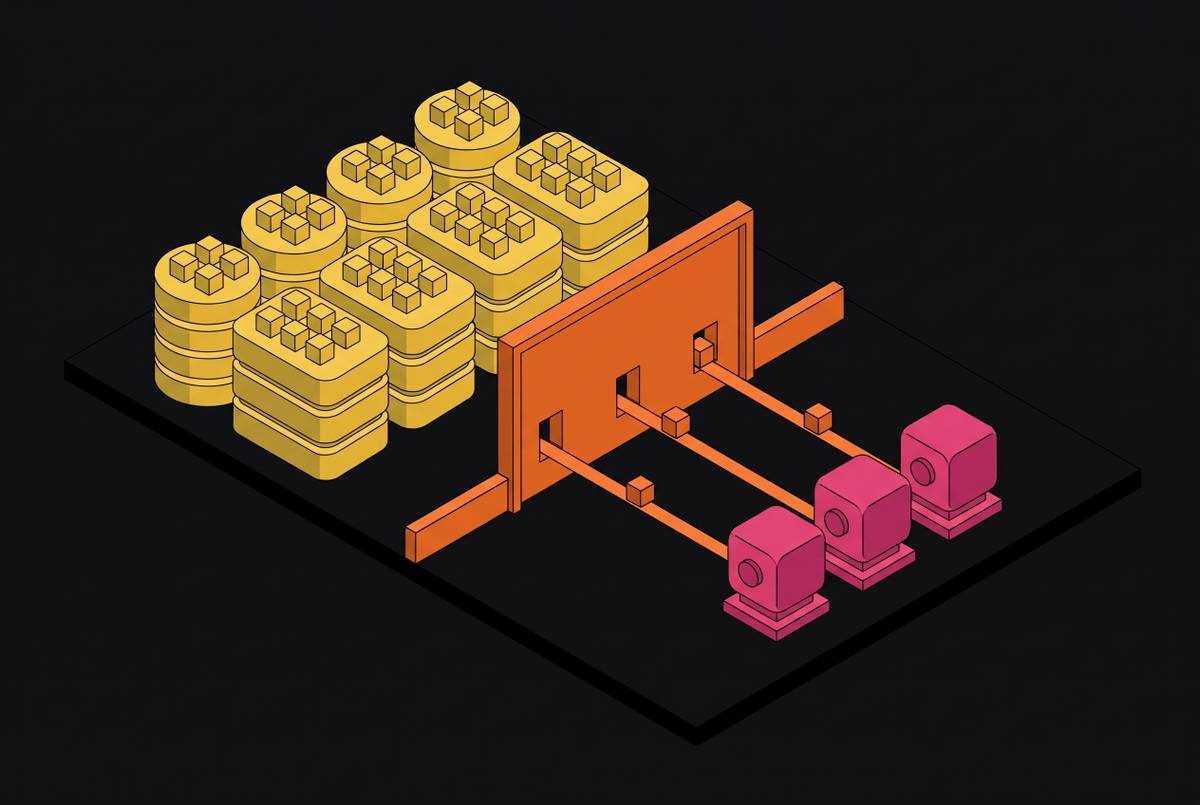
AI agents can use customer-owned warehouse data to answer questions through an embedded integration layer that enforces permissioned data contracts and keeps direct warehouse credentials out of the agents’ hands. The contract defines what each agent may query, for which purpose, and for how long, while making its actions auditable. This architecture makes governed query access part of the product and keeps raw database pipelines hidden from the agent.
Why direct warehouse credentials cannot govern AI agents at scale
Credential-based access assumes that once an identity has access, that is enough to govern what it does next. Human-oriented governance developed around a user who logs in, queries, and logs out. Agents operate at a different rhythm entirely. They may query all the time, perhaps millions of times a day, even as the business purpose for their access changes. An agent given broad read access in January may still have it in August, even after data classifications or regulatory requirements change.
This mismatch produces structural over-permissioning. Teams reuse approved credentials to avoid blocking workflows, widen permissions to reduce friction, and defer cleanup. Access persists without a clear owner or endpoint. Warehouse permissions can limit access, but the credential itself does not say what each agent task is for, how long it may run, or what evidence it must leave.
Mayer Brown’s October 2026 legal update names privilege and permission risk as a concern of its own for agentic AI. A malfunctioning or compromised agent can exfiltrate data, alter records, or trigger downstream actions beyond its intended scope at machine speed. Attribution is difficult after the event, too. Non-deterministic reasoning can make it hard to distinguish an attack from a configuration error or model behavior, increasing the need for controls that operate independently of the agent.
What a permissioned data contract is and what it adds that credentials cannot
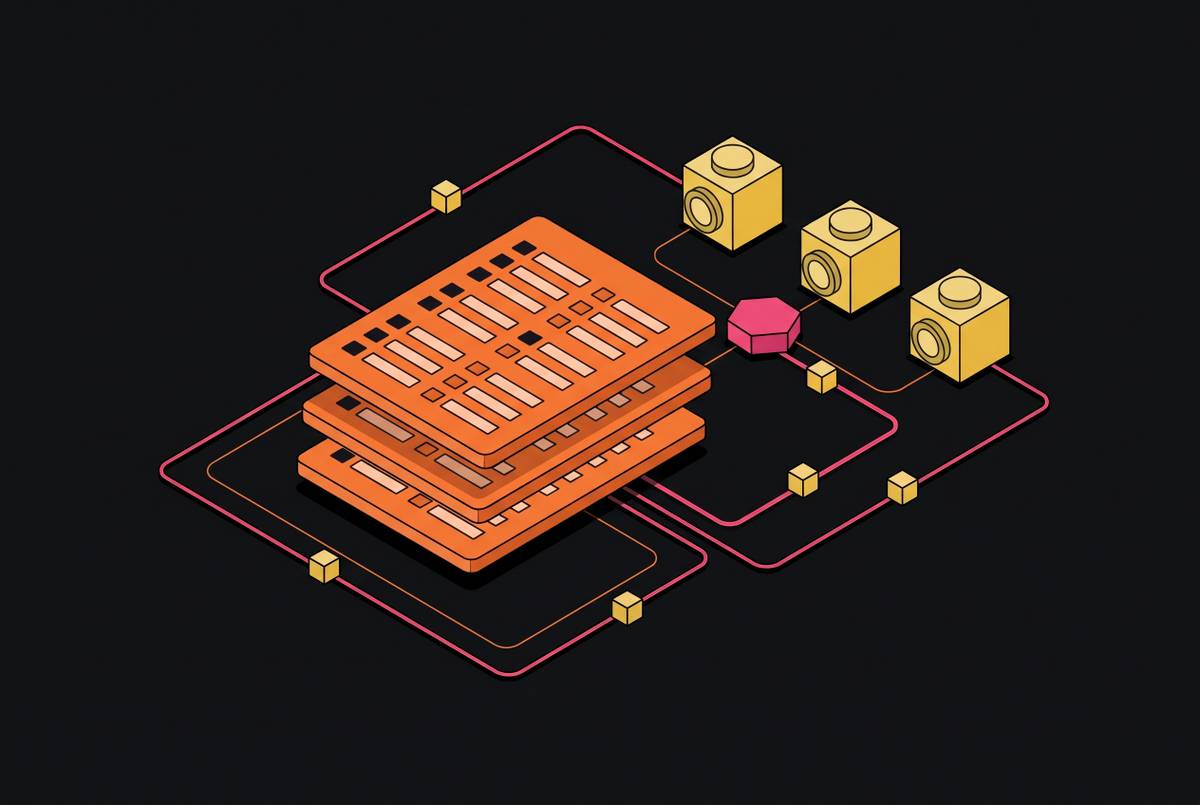
A permissioned data contract is a formal, machine-executable layer between an agent and a warehouse. It specifies permitted queries, their conditions, and their duration. Authentication remains necessary, but it is only the start. The contract binds access to scope, purpose, lifecycle, and audit obligations rather than treating a valid credential as sufficient authority to compute.
Atlan defines data contracts for AI as agreements in which data producers and AI consumers set out the schema, quality guarantees, semantic meaning, and access policies. The AI-ready extension makes these definitions machine-readable and available at inference time. Enforcement moves to the moment of use. Instead of checking a contract only when data enters a warehouse, the system evaluates it when an agent queries, before the result becomes agent context.
In that model, scope sets out what the agent may query, and purpose-binding checks whether it may use the data for its intended purpose. Lifecycle terms establish when authority ends, including automatic expiration and cascading revocation after user deprovisioning. Rate limits constrain runaway loops without requiring manual intervention. Auditability supplies the record of the action and authorization decision. These terms govern a task’s use of data.
How the Model Context Protocol makes permissioned contracts operational at scale
Anthropic introduced the Model Context Protocol in November 2024 as a standard interface for connecting agents to external systems. In a permissioned architecture, each data source is exposed through an MCP server that mediates queries instead of passing warehouse credentials to every agent. Enforcement then has a shared execution point. Contract checks can run at the server before requests reach the underlying store, reducing fragmented integration work across agents.
Existing implementations demonstrate parts of this pattern, though they do not establish identical contract capabilities. Snowflake runs managed MCP servers exposing governed query and search tools, and acquired a company focused on enterprise MCP governance, agent identities, permissions, and audit trails across tools. Dremio exposes its lakehouse through MCP so agents query governed Iceberg data under the same access controls as humans. Microsoft’s SQL MCP Server uses DAB’s role-based access control to define permitted CRUD functions and included or excluded fields for each configured entity. Google Cloud’s MCP Toolbox for Databases, formerly Gen AI Toolbox for Databases, gives agents an open-source way to connect to enterprise data.
Entropy Data’s Data Product MCP architecture, published on arXiv in 2025, connects semantic discovery, AI-driven validation against approved business purposes, and real-time contract enforcement. Its assessment drew on feedback from 16 data governance experts. MCP itself, however, is not a security guarantee. Mayer Brown identifies compromised MCP plugins as a supply-chain risk because they can intercept communications or inject harmful instructions. The interface that centralizes enforcement must therefore be governed itself.
Purpose-binding: why per-query authorization is the governance primitive credentials skip
Purpose-binding checks why an agent is querying before any computation occurs. In the Data Product MCP architecture, the system first identifies a dataset and then compares the declared purpose with contracts attached to the relevant data products. A noncompliant purpose blocks execution despite technical access to the data. Possession of access does not settle authorization.
Session-level control cannot make that distinction on its own. An authorization decision for each proposed use of data must evaluate the agent’s actions against the request’s content, prior actions in the session, and current business context before execution.
That decision requires terms a policy engine can execute. “Access should be approved by management” leaves the approval condition outside the executable rule. By contrast, “DENY SELECT * queries returning more than 100 rows from the customer_data schema for agents without explicit bulk-access certification” names a request pattern, a data scope, and an authorization condition. The policy has become an enforceable predicate. Purpose definitions need comparable precision to constrain execution.
WorkOS describes delegated authorization through an intersection rule. Effective permissions are what the agent may do AND what the user is currently allowed to do. If the user cannot delete a project, the agent cannot delete it on that user’s behalf, even when its own permitted functions include deletion.
Audit trails and lifecycle termination as contract terms, not operational afterthoughts
Auditability begins with a contractual requirement to record actions. WorkOS specifies dual-identity audit logs containing the agent identity, user identity, and decision for every action. That distinction makes delegated actions traceable to both parties. Without it, a record may not establish whether a human or an agent made a change.
Termination needs the same treatment at design time. Agent access that survives a departing user or a churned customer becomes zombie access, detached from the relationship that justified it. Cascading revocation binds its end to user deprovisioning. WorkOS recommends testing this behavior before it is needed, so revocation is a functioning contract obligation.
Jing Zhang’s February 2026 paper, Right to History, proposes a complete, verifiable, tamper-evident record of every agent action on an individual’s own hardware. Its implementation uses RFC 6962 Merkle tree append-only audit logs and reports sub-1.3 ms median action latency, with 448-byte Merkle inclusion proofs at 10,000 log entries. The performance result answers a practical engineering objection. It demonstrates that cryptographic auditability can be operationally feasible, though it does not establish the cost for every warehouse deployment.
The paper also connects agent history to logging and transparency expectations. The EU AI Act sets rules that must be followed, while the NIST AI Risk Management Framework recommends practices that are voluntary under the law. Those categories should not be conflated in contracts. Both support setting out what history exists and how access ends before agents enter production.
What the contract layer must cover when agents query across regulated or sensitive data
For a regulated deployment, scope, residency, and incident notification must be spelled out as duties. Mayer Brown says that when an agent is compromised or malfunctions, the consequences may include breach notification duties, regulatory investigations, contractual liability, and third-party claims. A contract must connect permitted data use with the obligations that apply when that use goes wrong.
The European Commission states that EU AI Act transparency duties took effect on 2 August 2026, with high-risk system obligations following from 2 December 2027. Contracts governing agent access must anticipate both, rather than assume a single implementation milestone resolves all future obligations.
When set up properly and isolated within a private cloud network, one deployment pattern can help meet several requirements set by regulators. These include PHI isolation for HIPAA, data residency for GDPR, network security controls for SOC 2, and operational accountability for financial services regulators. Private deployment can make isolation and location concrete operating conditions under which the contract permits access.
Mayer Brown identifies security standards, incident reporting, audit rights, termination rights, governance, and liability allocation as focal points in agentic AI negotiations. Permission governance and termination tied to what an agent does can work directly through executable access controls. Other provisions allocate duties between the parties. The permissioned contract model needs both dimensions, because a query engine can enforce an access rule but cannot replace an agreement about incident responsibility or legal exposure.
The objection that data-layer enforcement is necessary but not sufficient
Mayer Brown identifies prompt injection as a threat in which malicious instructions enter through content an agent processes. That attack operates above the data layer. Input sanitization, instruction firewalls, and output validation remain complementary defenses rather than functions that a query contract can replace.
The same limit applies to the enforcement path itself. A compromised MCP plugin may intercept communications, manipulate data, or inject instructions into an agent’s workflow. The contract governs permitted queries. It cannot by itself prevent a compromised intermediary from misrepresenting a request, which makes supply-chain controls essential to preserving the boundary on which enforcement depends.
This limitation does not weaken the case for independent data-layer authorization. When model-layer guardrails fail, a contract enforcement layer that still works can reject an unauthorized query even if the agent fails to see its mistake. The two controls fail in different ways. WorkOS adds out-of-band human approval for irreversible or high-impact actions as a further control between agent decisions and execution. Other defenses can fail while the data contract remains the floor below which no query can fall.
How do SaaS teams give AI agents secure embedded access to customer-owned warehouse data?
SaaS teams can implement this architecture through embeddable platforms and open tooling rather than build every governance component themselves. An agent should have governed, schema-aware query access to customer-owned data, with the embedded layer handling access controls and auditability and keeping raw database pipelines hidden. Where authorization runs matters as well as whether the infrastructure is managed or custom.
For products that sync data to customers’ warehouses, databases, or object storage, that boundary begins in the connectivity layer. Destination-based export and import with role-scoped, auditable access establishes the governed substrate for agent queries. A sync permission alone does not perform the per-purpose authorization required when an agent uses the resulting data, so the integration platform is a natural enforcement point only when it supports those contract terms.
Teams should check whether a platform has SOC 2 Type II certification, end-to-end encryption, and an option for private-cloud deployment to meet residency requirements. These do not substitute for query-level authorization. Mayer Brown’s negotiation framework adds data residency guarantees, audit rights, incident reporting commitments, and liability allocation to the vendor assessment, connecting the implementation choice to the duties that survive an incident.
Embedding these capabilities lets engineering teams work on how the product behaves without rebuilding governance infrastructure for each deployment. It also places scope, purpose, history, and termination where access actually occurs. Teams that treat data connectivity as a governed feature can ship faster and bear less compliance risk than teams that treat it solely as infrastructure to build.