Idempotent Upsert Patterns for Warehouse Destinations
Three idempotent patterns prevent silent data corruption during warehouse retries.
Warehouse upserts are reliable only when repeating a write leaves the destination unchanged. Partition overwrite, key-matched upsert, and staging-table swap provide that guarantee at different boundaries. Choosing the right boundary for the data, then preserving it through retries, engine-specific behavior, and tenant isolation, separates dependable delivery from silent corruption.
Why idempotency is the load-bearing property of any warehouse pipeline
Orchestrators retry failed tasks, backfills revisit historical ranges, and network blips or quota limits leave delivery with at-least-once semantics. Engineers also rerun jobs during debugging without always knowing what reached the destination. Concurrent tasks within a DAG run and writes across backfill runs make a strictly sequential view of delivery insufficient.
With a blind append, those normal events lead to data errors. Running it twice on a three-row dataset leaves the destination with six rows, with duplicates indistinguishable from legitimate records. Aggregates inflate, revenue reports become wrong, and dashboards misfire. The resulting loss of trust and manual deduplication work recur with every incident.
Idempotency requires the same input, run any number of times, to leave the target in exactly the same state. Row counts and aggregates must match, and no partial state may be left behind. Blind INSERT or APPEND is therefore an unsafe default, even when it is the system’s default behavior. The solution depends on matching the write strategy to the shape of the data and the warehouse engine.
The prerequisite every pattern depends on: a stable, source-derived identity key
That match begins with identity, because a retry must recognize the data it has already written. A stable business key such as customer_id, event_id, or order_id comes from the source and remains unchanged across attempts. An auto-incremented or timestamp-derived ID generated during processing does the opposite. It gives the same source record a new identity on a later run, so the destination treats a duplicate as another record.
For partitioned pipelines, the partition key is also part of that identity. A date or hour must identify the intended source period. Accordingly, execution_date should come from the scheduler context, such as Airflow’s execution_date, never from CURRENT_DATE or NOW() at runtime. Logging that date and the retry attempt number with stable keys creates a lineage trail for investigating duplicates. None of the write patterns can compensate for an identity that changes between attempts.
Partition overwrite: the simplest safe pattern for time-partitioned batch loads
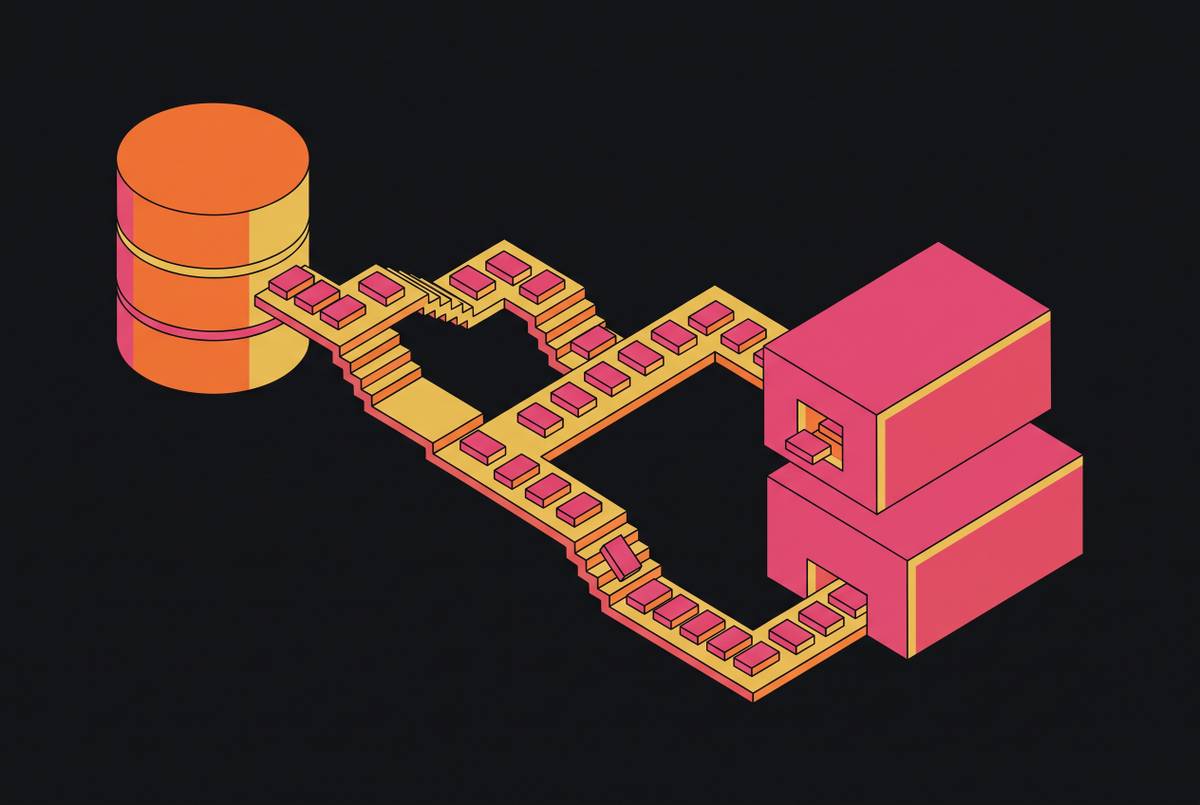
For daily or hourly batches, the time partition provides a natural replacement boundary. When the complete dataset maps cleanly to that boundary, overwriting the partition avoids row-level matching. The basic operation deletes all rows for the target partition, such as event_date = '2024-01-15', then inserts the freshly computed set. A retry clears whatever the failed attempt wrote and rebuilds the same partition.
The weakness of separate deletion and insertion is the interval between them. A consumer querying after the delete but before the insert sees an empty partition. With an atomic operation such as INSERT OVERWRITE, Delta Lake’s replaceWhere, or a supported dynamic partition overwrite, consumers never see that empty partition. Where separate statements are necessary, they belong inside a transaction on engines that support one. Correctness must hold during failure and after a later successful rerun.
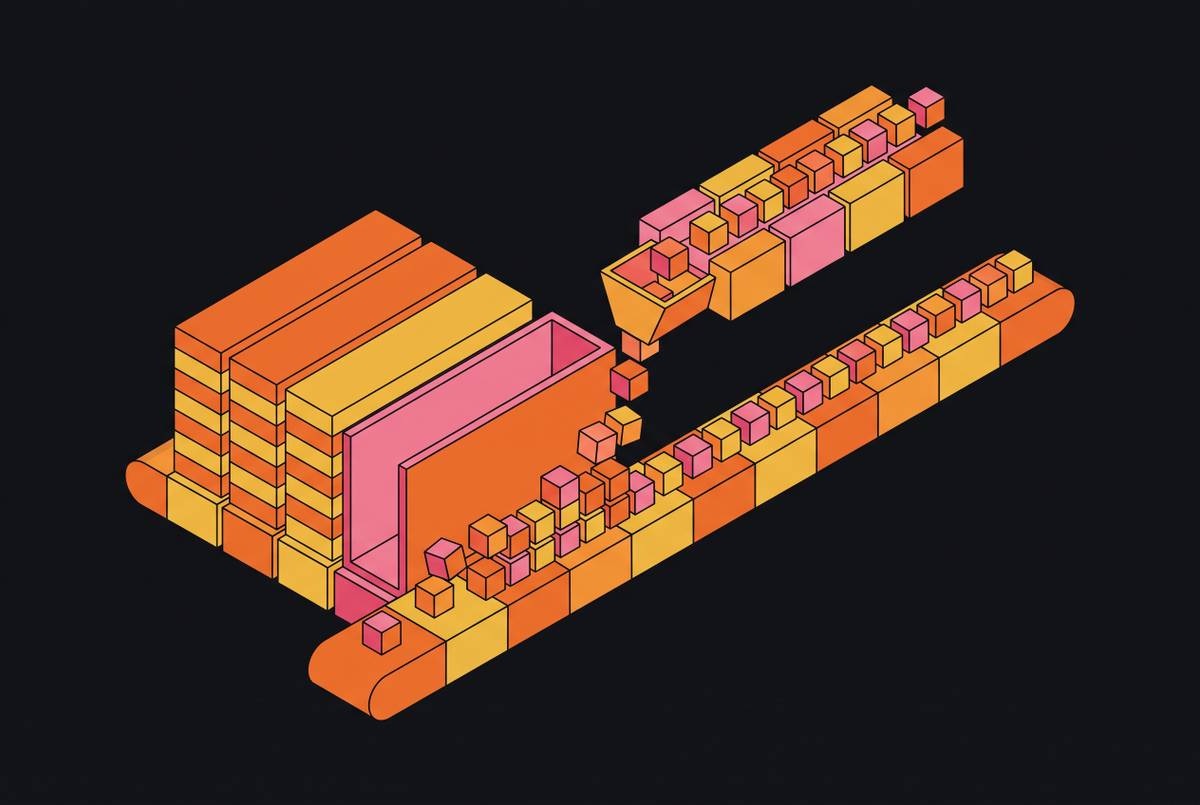
Concurrent file writes introduce a different hazard. Spark’s bare mode='overwrite' on a shared output path can race under parallel Airflow retries and cause data loss. Partitioning writes by execution_date confines each date’s writes to its partition directory, with partitions combined at read time. Attempts that target the same date still share that date boundary. For non-Delta Parquet or CSV writes, the staging approach uses a UUID-suffixed path, validates expected row counts, and atomically renames into the final path where that operation is supported.
The trade-off is recomputation. Replacing a complete daily partition can be acceptable even when only a few rows changed, but rebuilding a large historical partition can be expensive. The pattern also fits poorly when there is no clean partitioning key or when late-arriving records cross the intended partition boundary. In those cases, the unit of identity must move from the period to the individual record.
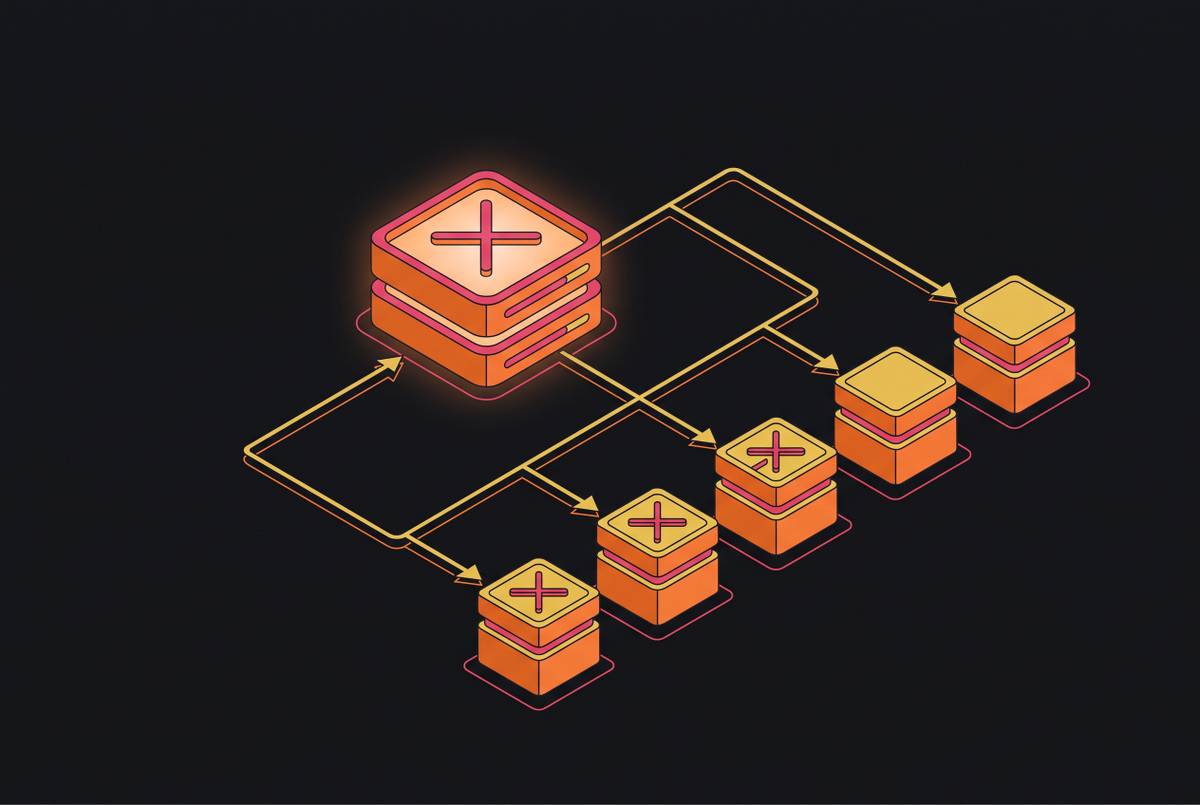
Key-matched upsert makes that narrower match using the stable business key. Its WHEN NOT MATCHED THEN INSERT branch inserts a new record, while a record inserted by the first attempt matches on the second and is not inserted again. PostgreSQL handles these conflicts with INSERT ... ON CONFLICT, using DO UPDATE or DO NOTHING. Staging the incoming data also separates the write from the source query, so a slow upstream query does not hold locks on the target.
For versioned history, the business key alone is not enough to find the right match. The match must include a version or effective-date key so that a rerun closes the same record by setting end_date and opens the same new version. When that identity stays the same, the retry adds no history rows. Without it, reruns can create phantom history even when the business key stays the same.
Staging-table swap: atomic full-table replacement for snapshot and dimensional loads
A full snapshot needs a larger boundary than either a row or a time partition. For a complete dimension or reference dataset, consumers must see a whole table throughout replacement. A staging-table swap builds the replacement before consumers can see it. The production name then points to either the old complete table or the new complete table, never an intermediate state.
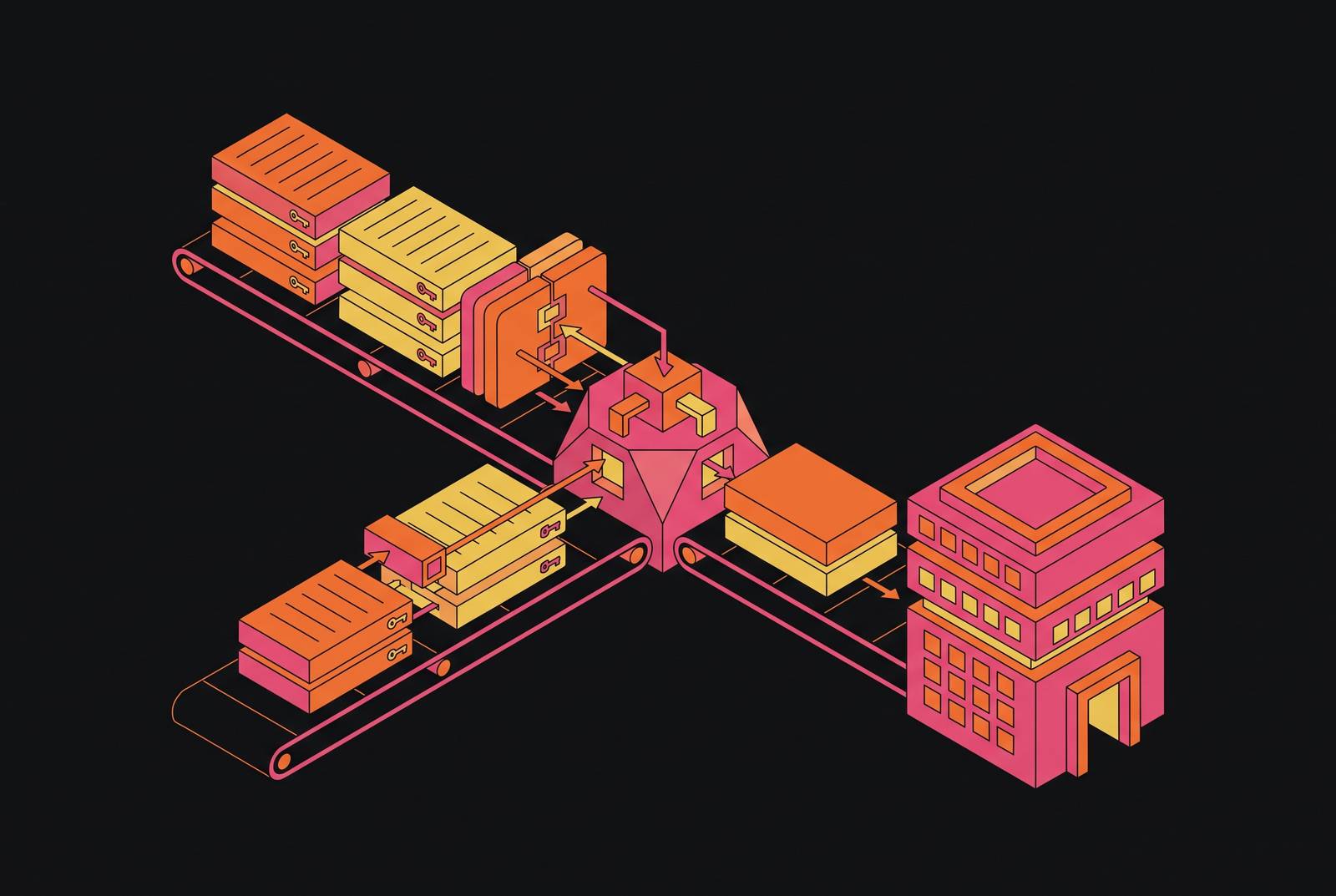
The load first writes the complete dataset into a shadow table such as dim_customers_staging. Validation compares its row count with the expected source count, checks that key columns are non-null and unique, and applies referential integrity checks. Only then does an atomic rename or view swap expose the replacement. If validation fails, the staging table is discarded and production remains untouched. On a retry, staging is overwritten and the swap is repeated.
A full snapshot has no partition boundary that can keep consumers from seeing a replacement in progress. A table-wide DELETE followed by INSERT can expose an empty or partly populated dataset. For non-partitioned file data, the equivalent principle is a UUID-suffixed staging path followed by an atomic rename where supported.
The cost makes this the wrong default for incremental or CDC pipelines. Recomputing a whole table is unnecessary when only a subset of records changed. Conversely, when complete replacement is the requirement, validation and atomic publication are the essential properties. Knowing that pattern is only half the problem, because embedding it in a product that writes to customer-owned destinations adds engine-specific behavior and operational failure modes.
How these patterns behave differently across warehouse engines
The logical boundaries are the same across engines, but whether they hold depends on syntax, atomicity, and locking. In BigQuery, WRITE_TRUNCATE in the warehouse job operation can replace a partition atomically. Full-table replacement can use CREATE OR REPLACE TABLE or a staging copy with WRITE_TRUNCATE. Apache Beam’s FILE_LOADS use of WRITE_TRUNCATE is not an atomic operation.
Snowflake uses ALTER TABLE RENAME to swap tables for full-table replacement. The relevant requirement is transactional publication when the load script executes a rename statement. Redshift configurations likewise require attention to the DDL transaction support available for the chosen operation. A staging workflow only provides the intended visibility guarantee when the destination supports the atomic transition it relies on.
Delta Lake’s replaceWhere predicate confines a DataFrameWriter overwrite to the intended logical partition without touching other data. It is the preferred approach over dynamic partition overwrite. For full-table replacement, Delta’s transaction log makes REPLACE TABLE atomic, and table cloning can also be used for a staging-table swap. These facilities differ from bare Spark overwrite behavior on shared paths, so a file-writing setting is not a substitute for a transactional table operation.
PostgreSQL can replace a partition with DELETE and INSERT inside BEGIN and COMMIT. With declarative partitioning, the delete must target the correct child table. For row-level replacement, DuckDB’s INSERT OR REPLACE requires an explicit PRIMARY KEY or UNIQUE constraint to enforce uniqueness through conflict handling. Across transactional engines, separate deletion and insertion must share a transaction to avoid exposing the gap between them.
Multi-tenant delivery and the additional failure modes that embedded pipelines introduce
A multi-tenant pipeline must preserve both write identity and ownership. The same logical write must reach each tenant’s isolated destination without a retry for one tenant changing another tenant’s data. A partition overwrite that omits the tenant key from its WHERE clause can replace another tenant’s partition with the wrong records. Every write must be scoped to the correct tenant.
That isolation also has an operational dimension. A retry for one tenant must not starve or block writes for others. Historical backfills can produce concurrent writes that violate an implementation’s assumption that retries arrive sequentially. Destination-based delivery to Snowflake, BigQuery, Redshift, and object storage must also respect each destination’s atomicity guarantees.
Under SOC 2 Type 2 best practices, intermediate stores should be encrypted, scoped to the correct tenant, and cleaned up after failure, including orphaned staging tables. Every intermediate write must have end-to-end encryption and clear data residency. These are compliance requirements that apply before the final swap.
The delivery model also affects commercial incentives. Destination-based pricing aligns with the number of destination connections and the volume written per destination, rather than treating source size or retry count as the measure of the pipeline. Charging for every transfer penalizes the replay and backfill behavior that idempotent patterns are designed to make safe.
Choosing the right pattern: a decision framework based on data shape and failure scenario
The decision starts with the smallest complete boundary that the load can safely replace. If the data maps to a clean daily or hourly partition and full recomputation is acceptable, choose partition overwrite. If only specific rows change, or there is no useful partition boundary, use key-matched upsert with stable source keys. If consumers require a complete new table with no intermediate empty state, choose staging-table swap. When identity is missing or unstable, fix it before implementing any of these patterns.
The next decision concerns the failure the write must survive. Run the pipeline twice on the same input and compare row counts and key aggregates, which must match exactly. Simulate a failure after deletion but before insertion and verify that recovery produces the correct state. Verify that the partition’s write key comes from scheduler context and that record identities do not depend on processing timestamps or generated IDs. These tests check that the load has a correctness guarantee even when a write fails.
Downstream cleanup does not supply that guarantee. Every consumer that reads between the first load and deduplication still sees dirty data. Likewise, blind append, processing-time surrogate keys, timestamp-based deduplication keys, and untransactional deletion followed by insertion each undermine the retry boundary.
The GERA Framework places a related discipline in a regulated architecture by separating ingestion, staging, core models, and semantic serving. Its staging layer, Layer B, standardizes identifiers, timestamps, and categorical fields before promotion to core models. That separation helps keep data ready before it is published, but standardization alone does not guarantee an atomic swap. As AI agents increasingly query synced data, this distinction becomes more consequential. An agent querying silently duplicated rows can derive wrong answers, and no amount of semantic layer governance repairs a corrupted source.